

For years now we have been seeing the number of 22 veteran suicides occurring daily across our country. But are those numbers rising or declining? What is the age breakdown on these suicides? We will do our best to try to shed some light on these questions in this week’s blog.
While we are less than a week out from Veteran’s Day 2019, but we can never stop our vigilance towards ending veteran suicides in our country. To try to understand today’s numbers we first need to look back about 14 years.
Veteran suicides in 2005 were recorded at the rate of 15.9 veteran suicides per day, according to the VA’s 2019 National Veteran Suicide Prevention Annual Report. The VA also concludes in their report that the veteran suicide rate for 2017 was 16.8 suicides per day. So why are the VA numbers lower than the 22 suicides a day has been being reported nationally?
The answer is quite simple. The numbers that the VA, lawmakers and the media have been throwing around for years has been either 20 or 22 a day. These numbers included active-duty military, guardsmen and reservists who served on active-duty, and National Guard and reserve members who were never federally activated. The numbers in the 2019 Annual Report from the VA now only accounts for actual veterans. The VA officials have indicated that the changes to this year’s report were made to focus solely on veterans to avoid confusion about the population they monitor and directly assist.
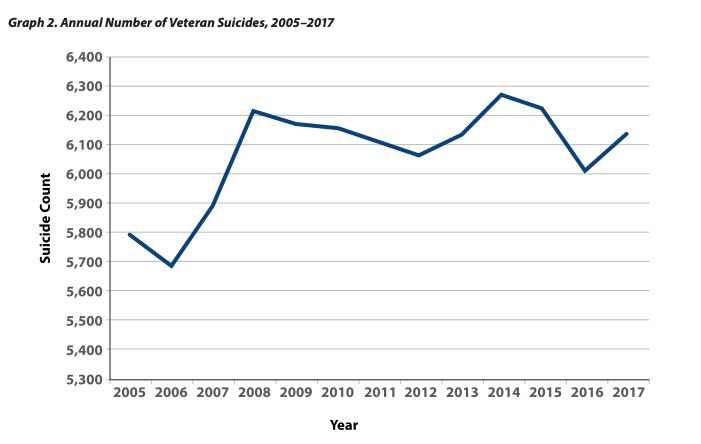
In my opinion, this was also done to make it appear as veteran suicide rates are dropping, when in actuality they are still increasing despite the number of veterans in our country getting lower each year as veterans from World War II, the Korea conflict, and Vietnam continue to pass. That means the suicide rates should be dropping as well, yet they are not.
According to an article published in September by Military.com, The total number of veterans in America dropped almost 2 percent from 2016 to 2017 (about 370,000 veterans) and was down almost 18 percent from 2005 to 2017.
These are staggering numbers that are 50% higher than the national suicide average when adjusted for similar demographic factors.
Even more alarming is that the suicide rate for veterans 34 and younger has spiked in the past two years according to a December 2018 Military.com article. “When we break down the numbers, the national numbers for veteran suicides, we’re seeing an increased rate within 18-to-34-year-olds,” said Dr. Keita Franklin, the VA’s national director of suicide prevention said in the article.
According to Franklin, the problems for younger veterans may be due to the transition process from active duty to civilian, which we all know is basically unaddressed by the military when we are discharged.
“Transition is so important,” she said. “We think it has something to do with making sure we’re transitioning them well, or perhaps there’s more we can do to prepare them for a successful transition.”
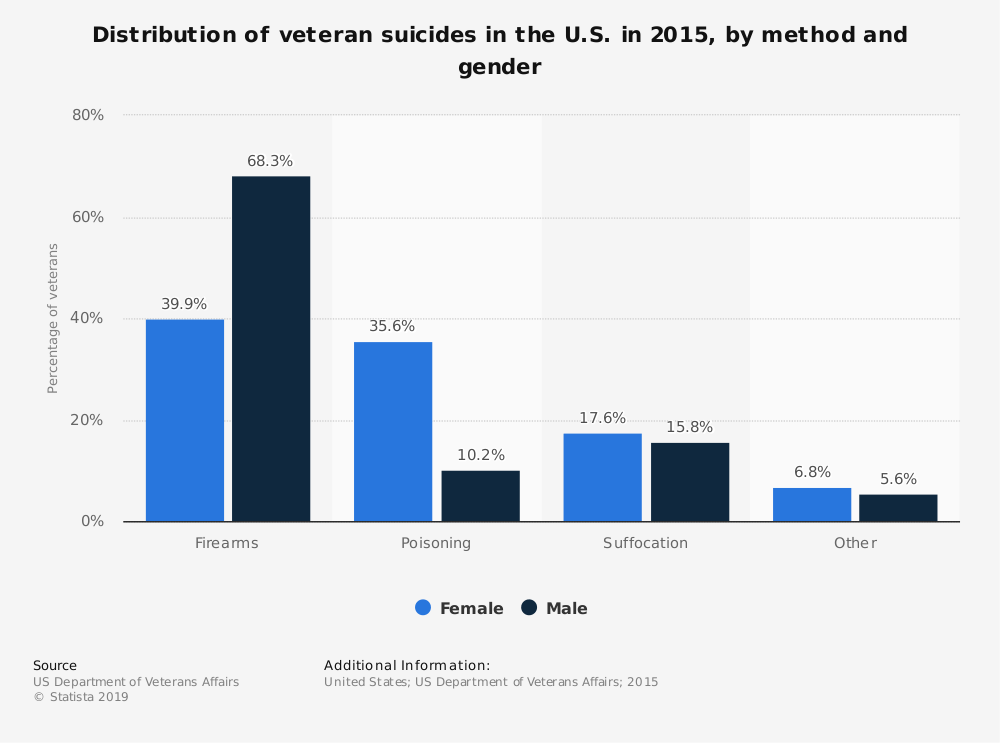
The main method of suicide for veterans has been their firearms, which the VA report indicates were used by 70.7% veteran males that committed suicide in 2017 and 43.2% of female veterans.
With roughly 20.4 million veterans out there we need to come together even more as a community and look out for each other. We had each other’s six on the field why should that change after our careers are over? It was a team effort during our service, yet we all try to go it alone in civilian life.
Trying to bury your service-related injuries and illnesses does nothing to help you heal and grow into civilian life, trust me, it only forces you to keep burying your issues until they eventually lead to an escalation in emotional outbursts that may disrupt the lives of their loved ones, sometimes result in arrest, or worse yet, taking their own lives as it seems everyone around them would be better off without them.
Nothing is further from the truth. It is just the combat-injury/illness that is talking, and it is wrong. You ARE so very important to those around you. Your wife, children, parents, brothers, sisters, and extended family all love you and want the best for you. Its not their fault that they don’t know what else to do.
WE, the veteran, must be ready to recognize that we need to change and that we need a strong support system in order to do so. So, grab your field phone and call it in. No one can make the changes for you. You MUST reach out and ask for help. You MUST be willing to make changes to your post-service life. You MUST take that first step.
As someone who was there myself a few years back and ready to call it a life as I watched by business crumble around me and 30-year marriage start to come unglued, in large part from my actions and behavior. I had been in denial about my PTSD for 37 years and had never been properly diagnosed for it as I was going to civilian doctors that only see either anxiety or depression.
Finally, I reached out to ask for help and hit the VA wall that so many of us hit. I had approved documents from the VA saying I was authorized to be treated and that I needed to contact my local VA clinic in the Phoenix area to make arrangement for appointments and to obtain my VA insurance card. Despite these documents I hit a stone wall when I called.
First, I was told that their computer system was down and would have to look me up manually. Then I was told I wasn’t listed in the system. My comment back was, “If you had to look it up manually and the system is down is it possible that you just can’t see me as I am newer and just signing up.”
His reply was that “I looked you up and you are not in the system. And, if you are not in the system, you don’t exist.” I was obviously shocked but not surprised that the VA was going to be difficult to get into.
Completely ready to give up and throw in the towel, several family members told me to contact by local congressional leader about this. Upon contacting Rep. Trent Franks’ office through their web site, I received a call back from his Veteran’s assistant, asking more questions and letting me know that they we are opening a congressional inquiry with the VA regarding my status.
Within one week I received a call from a representative from the VA Clinic in Surprise, AZ telling me he was going to guide me through everything personally and get me set up with physician and psychiatrist appointments. From there the doors started opening.
Don’t get me wrong, I still must fight the VA at many turns but most of the people I have been working with are excellent and truly care, along with a number who don’t. For instance, I have learned not to call or use the online portal to contact my caregivers or to make appointments because they rarely ever contacted me back. Instead I have started booking my upcoming appointments in person as I am leaving the office from my current appointment. Otherwise I find that I never get called to schedule or to check on how my meds are doing.
It’s not a perfect system, let alone a properly working system, but for most of us it is all we have for our treatments and medications. But it is the veteran community that’s even more important to keep an eye on and look out for those who are struggling with their injuries and illnesses and make sure they do not fall through the cracks.
If you know a veteran, or a friend of a veteran, that is struggling with PTSD, TBI, MSI, or a myriad of injuries/illnesses that affect our veterans, please check up on them. Make sure they know they have people who care what happens to them and that we want them to live full productive lives.
Brother and Sister Veterans, please put your pride aside and reach out to those around you. Their lives are better with you in it and they love you. Take that first step and reach out for help. We had your six on the field, and we have your six now. We all want you to be healthy and happy, but you MUST want it for yourself. No one can want it enough for you.
Remember, you are strong, brave warriors. You have given so much of yourself to this country that we can never fully repay it. But no matter how bad things are in civilian life, you served proudly and honorably in the military, don’t give up on your life after service. You can change it for the better.
Don’t ever give up. Keep fighting the strong fight. And remember, you are loved.
Until, next week….


















 The Ranting Vet